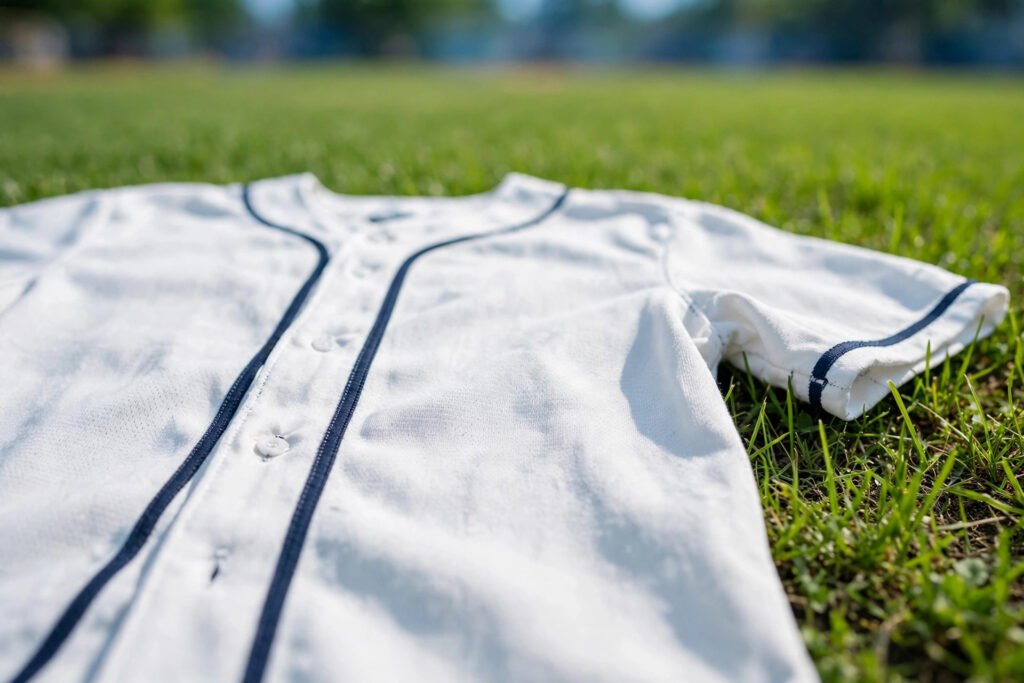
Baseball has one of the most recognizable uniforms in sport: the button front jersey, the piping, the long pants. Ordering them for a team looks simple until you get into fabric weights, fit options, and decoration methods. This guide covers what coaches, league organizers, and brand owners should settle before they place an order for custom baseball uniforms, so the kits that arrive match the ones you pictured.
What makes a baseball uniform different
Unlike most team kits, a baseball uniform is a two piece set built around a full button front jersey. The jersey usually carries a team wordmark or logo across the chest, player names and numbers on the back, and optional piping along the button placket and sleeves. Pants are long, with an elastic waistband or belt loops, and often a stirrup compatible cut at the ankle. When you order custom baseball uniforms, you are really ordering a small system: jersey, pants, and frequently a matching cap and belt. Decide up front whether all pieces come from one supplier, because matching colors across separate suppliers is a common source of frustration.
Fabric choices that actually matter
Baseball is played in heat for hours, so fabric breathability is not a luxury. Most modern jerseys use a lightweight polyester with mesh side or back panels, while traditionalists still like a heavier double knit for structure. Pants need a fabric with some stretch and reinforced knees, because sliding and crouching wear through thin material quickly. If fabric terminology confuses you, our catalog of custom sportswear is a useful place to compare weights and weaves. Ask for fabric samples before you commit to a full run, and wash test them if you can.
Decoration: sublimation, embroidery, or twill
Baseball offers all three classic decoration methods, and the choice changes both price and lifespan. Sublimation gives unlimited colors and photographs well, but works only on light colored polyester and cannot reproduce the raised, stitched look many teams want. Embroidery adds a premium feel for logos and chest marks but is slow and expensive for full back names and numbers. Sewn twill names and numbers, the classic pro look, are durable and crisp, but add weight and cost. Many teams mix methods: sublimated jersey body, embroidered chest logo, and twill for names and numbers. That combination gives the best balance of cost, durability, and appearance, so ask your supplier to price it as an option.
Fit and sizing: baggy, athletic, or youth
Baseball fits range from the traditional loose pro cut to the modern athletic taper. Youth players almost always need the roomier cut, while adult leagues increasingly ask for the fitted look. The practical step that saves the most trouble is collecting player measurements rather than relying on letter sizes alone, because one supplier’s large is another’s extra large. Ask your supplier for a size chart with garment measurements, not just age ranges, and build your size breakdown from chest, waist, and inseam numbers. A common mistake is ordering equal quantities of each size; on a real roster, mediums and larges usually outnumber smalls and double extra larges by a wide margin. Plan for a few extras in the middle sizes for late signups and replacements.
What your order packet should include
Manufacturers quote faster and more accurately when the first message contains everything. For custom baseball uniforms, send: your size breakdown by player, your artwork in vector format, your color references, your decoration method, and your delivery deadline. If you do not have artwork yet, say so, because most suppliers can work from a sketch, a photo, or a description. Mention whether you need matching caps, belts, and socks in the same run. A complete packet often saves a round of back and forth questions and gets you a firm price instead of a range.
A note on minimums and honesty
Our minimum order quantity is 50 pieces, which covers a typical roster plus spares. Be wary of any supplier that promises tiny minimums with no price penalty, because setup costs for embroidery and twill do not disappear at small volumes. If you need fewer pieces, ask about blank stock programs or simplified decoration, which can bring the per piece cost down. Planning for spares is also wise: a torn jersey mid season is much easier to replace if the fabric and color are still in stock.
Ready to kit your team? Send your roster, artwork, and color scheme through our custom order page, and we will quote your custom baseball uniforms with a clear breakdown of fabric, decoration, and delivery.
Ready to start? Request a quote.