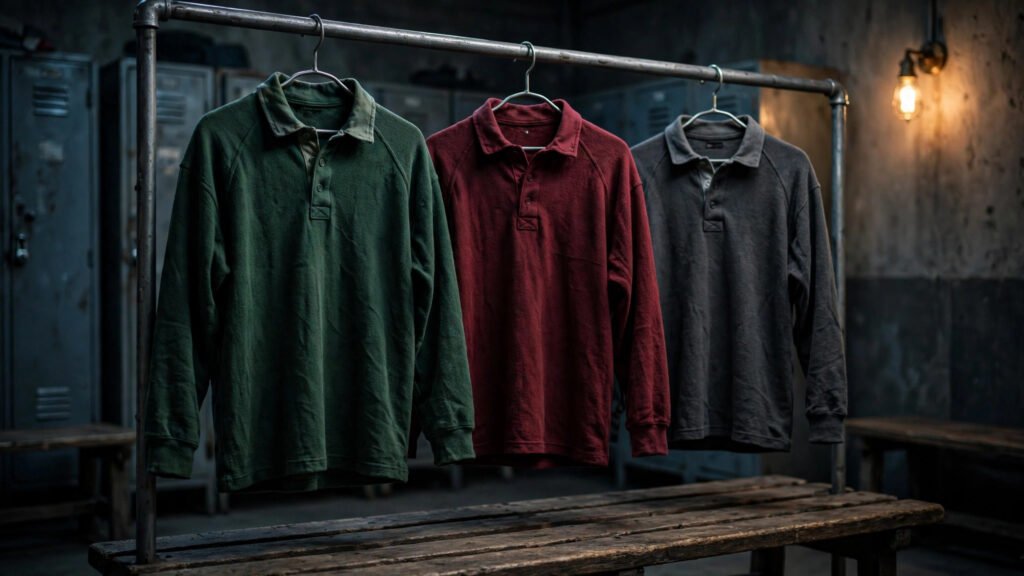
Why Rugby Kits Are Different
Rugby is not football in different socks. A rugby kit gets grabbed, pulled, stretched, and dragged through mud for eighty minutes, and then it has to do it all again next week. Ordering custom rugby kits with the same mindset you would use for a football order is the most common mistake clubs make, and it is the reason cheap kits fall apart mid-season. This guide covers what actually matters when you order: fabric, fit, printing, and the details that decide whether your kit survives the season.
In most sports, the jersey is decoration over an athletic body. In rugby, it is a handle. Tackles grip the jersey, scrums compress it, and mauls stretch seams in every direction at once. That means three things matter more than anywhere else: tear strength, seam quality, and stretch recovery. A fabric that feels great on a hanger can lose its shape after a month of Saturdays if it cannot recover its stretch. When you compare custom rugby kits from different suppliers, ask specifically how the fabric behaves under repeated stretching, not just how it feels brand new.
Fabrics for Custom Rugby Kits: What to Specify
Modern rugby jerseys are almost always cut from polyester interlock or polyester-spandex blends. The knit is tight and smooth, which makes it harder for opponents to grip, and it wicks sweat well. For senior men’s sides, specify a heavier interlock in the 220 to 260 GSM range; the extra weight gives tear resistance that featherweight fabrics cannot match. Lightweight 180 GSM fabric looks fast but will not survive a season of tackles.
Stretch matters as much as weight. A jersey with 4-way stretch moves with the player instead of restricting the tackle, and it recovers instead of bagging out at the neck and cuffs. A small percentage of elastane, typically 5 to 10 percent, makes the difference. For traditionalists who prefer the old-school cotton look, a cotton-polyester blend keeps the classic feel while adding the durability and wash stability that pure cotton lacks.
Fit: Modern Athletic or Traditional?
Rugby fit is a genuine debate, and the right answer depends on your players. The modern athletic fit sits close to the body, which makes the jersey harder to grab and looks sharp on the pitch. It suits sides with athletic builds who want a performance edge. The traditional fit is looser through the body, more forgiving for a squad with mixed builds, and more comfortable for social players.
Whatever fit you choose, think about the split in your squad. Forwards are generally broader and shorter, backs taller and leaner, and a single fit across thirty players rarely flatters everyone. Many clubs order two fits, or at least make sure their supplier grades sizes properly from XS to 3XL rather than just stretching one pattern. Also confirm the fit works with shoulder pads, if your players wear them, since a tight jersey over pads becomes restrictive fast.
Printing That Survives the Scrum
Sublimation is the right choice for custom rugby kits, and it is worth understanding why. The design is dyed directly into the polyester fibres, so there is nothing on the surface to crack, peel, or flake when the shirt is grabbed and twisted. Names, numbers, hoops, sashes, and sponsor logos all go through the same process with no extra setup cost per design element. If your club runs home, away, and training kits with different designs, sublimation handles the complexity without breaking your budget.
Screen printing can work on cotton-blend training tops and supporter tees, but avoid it on match jerseys. Thick ink prints crack under repeated stretching, and a cracked number on a kit you paid good money for is an expensive disappointment. Embroidery belongs on polos, hoodies, and staff jackets, not the playing shirt, where it adds a premium touch without affecting performance.
Details That Decide Quality
Rugby shirts have a few construction details that separate a quality garment from a cheap one. Reinforced seams, especially flatlock stitching at the shoulders, stop seams from splitting under load. A proper rugby collar, either a buttoned polo collar or a reinforced V-neck, holds its shape instead of stretching into a saggy neckline after ten washes. Cuffs and hem should have enough elasticity to recover their shape.
Numbers need attention too. World Rugby guidelines require legible numbers, and your club’s league may have its own rules about size and placement. Confirm the numbering rules before artwork is finalised, because reprinting a full kit for a number that breaks regulations is a costly error.
Ordering Checklist for Your Club
Start with a sample garment to confirm fabric weight, fit, and collar construction. Send a clear size breakdown across forwards and backs, and order a few extra shirts in popular sizes, because players grow, signings arrive, and sponsors appear mid-season. Confirm the design proof shows exact number placement and sponsor positions. Finally, agree the timeline in writing: sampling, production, and delivery each need their own date, since a kit that arrives the week after the season starts helps no one.
Fabricory works with clubs through every one of these steps, from fabric selection to final proofs. Browse our sportswear catalog to see the range of styles, then tell us about your club’s needs through our custom order page.
Start your custom rugby kit order today and get a quote for your club.
Ready to start? Request a quote.