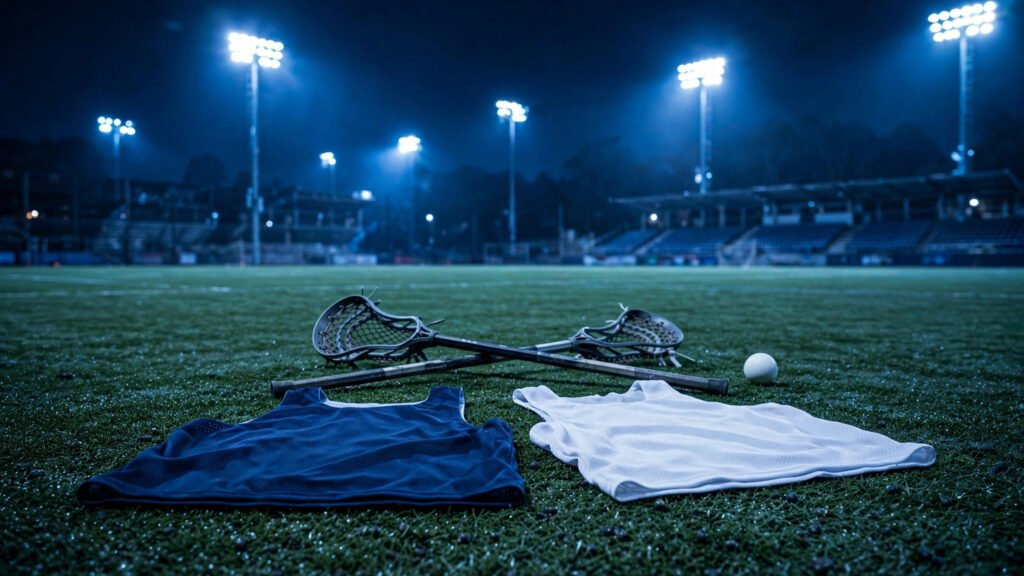
If you run a lacrosse program, ordering custom lacrosse uniforms is one of the most visible decisions you will make this season. Your kit shows up in every team photo, every highlight reel, and every opponent’s pregame film. It also has to survive stick checks, ground balls, and washing machines that never seem to rest. This guide walks you through the fabrics, fits, and decoration choices that matter, so you can order with confidence.
What Makes a Lacrosse Uniform Different
Lacrosse sits in a unique spot between contact and running sports. Men’s and boys’ kits are built around a loose, sleeveless pinnie worn over shoulder pads and arm guards, paired with generous shorts. Women’s and girls’ kits use a similar sleeveless pinnie or racerback top, usually paired with a kilt-style skirt or athletic shorts. Goalkeepers wear the same kit but sized up to fit over a chest protector.
The defining trait of lacrosse apparel is mesh. Traditional lacrosse pinnies are made from open mesh polyester, a fabric that breathes freely and moves with the player. Modern performance kits often combine mesh side and back panels with smoother solid panels on the front, giving you ventilation where you sweat and a clean surface where your graphics live. When you specify custom lacrosse uniforms, ask for the mesh weight, measured in ounces per square yard. Lightweight mesh around 6 to 8 ounces suits hot weather and fast play, while pro weight mesh at 10 to 12 ounces is tougher and hangs with a more substantial drape that many varsity and college programs prefer.
Fabrics: What to Specify and Why It Matters
The workhorse of lacrosse apparel is polyester mesh, and for good reason. Polyester does not absorb water the way cotton does, so a rain-soaked pinnie stays light instead of dragging on the player. It also holds sublimated graphics permanently, which matters because lacrosse kits carry big numbers, school names, and sponsor logos that screen printing would eventually crack or peel away from mesh.
For the solid front panels and for shorts, look for performance polyester in a pique or tricot knit. A common specification is 150 to 180 GSM, a weight range that gives a solid hand feel without trapping heat. Shorts often use a woven polyester taslan or a knit with a mesh liner, and an elastic waistband with an internal drawcord is the standard that players expect. If your club trains through cold springs, consider a brushed-back polyester for warmup tops, it adds warmth without the weight of fleece.
One detail buyers sometimes miss: request reinforced stitching at stress points. Lacrosse involves constant tugging and stick contact, so double-needle stitching on the shoulders, armholes, and side seams is worth specifying. A well-made pinnie has binding tape along the armholes and neck that keeps the mesh from curling after repeated washing.
Fit: Sizing for Protective Gear and Real Bodies
Fit is where lacrosse orders most often go wrong. Men’s and boys’ pinnies must be roomy enough to fit over shoulder pads, which adds several inches around the chest and shoulders compared to the player’s bare measurements. When you collect player sizes, ask every athlete to try on their pads first, or to measure while wearing them. A pinnie that fits perfectly bare will ride tight and short once pads go under it.
Women’s lacrosse kits follow a different pattern. The tops are closer fitting with racerback or standard strap styling, and many programs let players choose between a kilt-style skirt and shorts. Offer both options if your roster is mixed on preference. Youth players grow fast, so youth kits usually run one size generous, and ordering a few extra blanks in common sizes saves you from scrambling when a midseason call-up joins the squad.
Getting the size breakdown right is the least glamorous part of ordering custom lacrosse uniforms and the most important. Collect every player’s measurements while they wear their pads, then plan your order around our 50 piece minimum so every roster spot is covered. For inspiration on range planning, browse our sportswear catalog to see how other clubs structure their kit orders.
Decoration: Sublimation Wins for Lacrosse
Almost all modern lacrosse apparel is sublimated, meaning the graphics are dyed directly into the polyester fibers. This is the right call for the sport. Sublimation never cracks, peels, or fades, it covers mesh and solid panels in one pass, and it allows unlimited colors and all-over patterns at no extra artwork cost. Numbers, names, conference patches, and sponsor logos can all be printed in the same process.
If you are new to the technique, our plain English guide to sublimation printing on jerseys explains how it works and what artwork to supply. Clubs that also run private label apparel programs will find the same principles apply to retail style garments.
What to Ask Before You Order
Use this checklist when you talk to any supplier of custom lacrosse uniforms:
Fabric specification: ask for mesh weight in ounces and panel fabric in GSM, not just “polyester mesh.”
Fit system: confirm whether the pinnie pattern is cut for shoulder pads or for bare wear, and request a size chart with garment measurements, not just S to XXL labels.
Construction: specify double-needle stitching, bound armholes and neck, and a reinforced waistband on shorts.
Decoration method: confirm full sublimation for numbers, names, and graphics, and ask how proofs are handled.
Splitting: check that your 50 piece minimum can be split across men’s, women’s, and youth cuts, or between home and away colors, so one order covers the whole program.
Turnaround: agree a realistic schedule in writing, including time for artwork proofing, production, and international shipping.
At Fabricory, we are a Sialkot based maker of custom teamwear, producing through vetted partner production units rather than claiming a factory of our own. Our minimum order is 50 pieces, which can be split across sizes and cuts within your lacrosse program. We build kits to the specifications above because we know they have to survive a full season of play.
Ready to kit out your program? Start your order through our custom order page, and bring your roster, your colors, and your season timeline. We will take it from there.
Ready to start? Request a quote.