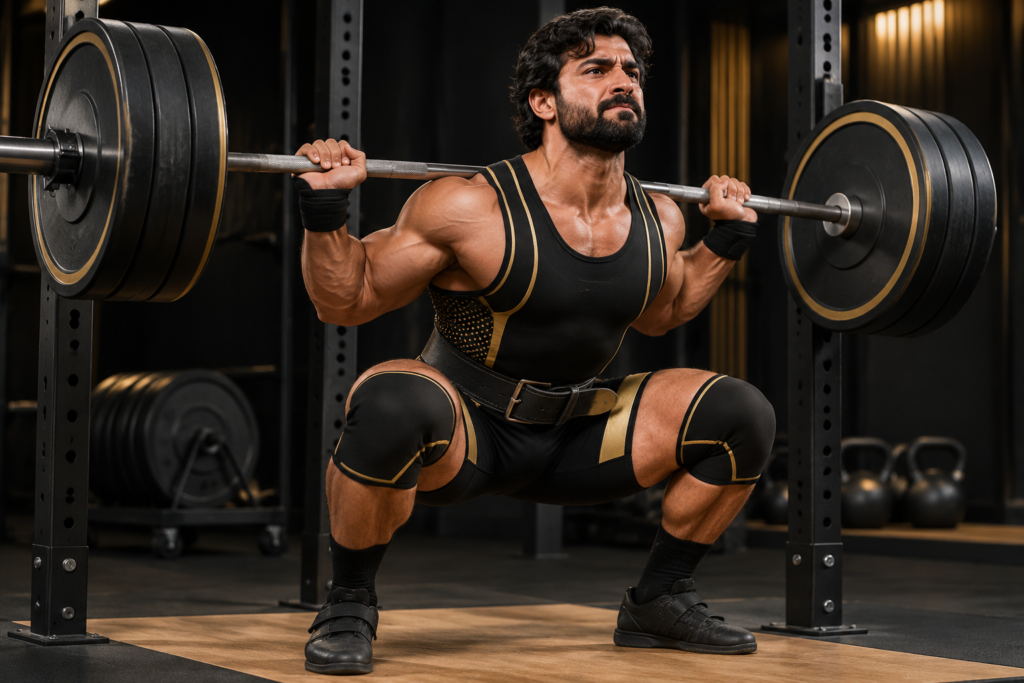
A powerlifting singlet looks like the simplest piece of strength kit there is. One fitted garment, no sleeves, no loose fabric, nothing to catch on a bar. On the platform, though, that simplicity is the point. A custom powerlifting singlet has to stay in place through a deep squat, a heavy bench press and a deadlift pull, carry the club identity clearly, and survive being washed after every session. If you run a powerlifting club, ordering custom powerlifting singlets and support gear is a decision about fabric, fit and printing that will show up in every lift.
What Makes Custom Powerlifting Singlets Different
Powerlifting is three lifts under maximum load, so a singlet has to fit like a second skin without restricting a single movement. A loose singlet rides up at the waist during a squat, bunches under a belt and gives the lifter something to think about besides the bar. A tight one pulls at the shoulders and limits reach. Look for room across the shoulders and chest, a body long enough to stay tucked through a full squat, and leg openings that sit flat without digging in during a heavy pull. Wide flat straps stay comfortable under a belt; narrow straps can roll and chafe. Ask your supplier how each size is patterned for lifting, and check the cut works across weight classes.
Fabrics That Hold Up Under Heavy Lifts
The fabric is the first decision, and it matters more in a singlet than in most teamwear. A polyester and spandex blend with four way stretch is the usual choice. It stretches with the body, holds its shape, wicks sweat and dries fast. Look for a knit around 200 to 240 GSM, heavy enough to resist grabbing without feeling bulky. Flatlock stitching is worth specifying too. It sits smooth against the skin and holds up under repeated pulling. Cotton blends feel soft but hold moisture and get heavy in hard training, so save them for warm up tops and walkout tees. Our sportswear catalog shows the range of styles we can produce.
Support Gear That Works With the Singlet
Most lifters need more than a singlet, and each support piece has its own job. Knee sleeves keep the knees warm through squats. Wrist wraps steady the bar under a heavy bench press. A lifting belt, worn over the singlet, is the piece most lifters notice first, so check the singlet sits flat under it and does not bunch at the front or back. Bench shirts and squat suits are a separate specification, with a much tighter fit and heavier fabric, so sample them in the exact sizes your lifters will use. Keep support gear in the same palette, crest and print colour, so the team reads as one unit.
Printing and Branding That Survive Lifting
Singlets get washed far more often than most teamwear, and they get pulled and rubbed under a belt, so the decoration method matters. Sublimation dyes the design into polyester fibres, so it cannot crack or peel and adds no weight. It suits bright, all over colour and large back prints. Small crests and sponsor marks often look better embroidered, but keep embroidery small, away from high stretch zones, and never where it rubs skin under a belt. Avoid heavy vinyl prints, which trap heat and stiffen the fabric where a lifter needs it to breathe. Leave clear space for the club name, lifter name and sponsor marks, with the back print large enough to read from the platform side. Wash a sample several times and train in it before you approve the bulk run.
Sizing, Quantities and Ordering for a Team
One powerlifting order has to cover a wide spread of weight classes, from the lightest junior to the heaviest senior. Collect sizes, heights and weight classes first, and build the size curve around your real squad, with extra stock in the middle classes. A singlet is fitted, so ask lifters for a chest measurement and a height as well as a top size, and check leg length on the tallest members. Check your federation’s rules before you finalise the design, since some set limits on colours, logos and sponsor marks. Fabricory’s minimum order is 50 pieces, split across singlets, support pieces and sizes, so a club can order a full range in one run if the artwork and fabric stay consistent. Allow time for sampling and approval, and agree the delivery window with your supplier in writing. Order one sample in the most common size and have a real lifter train in it for a week first.
Ready to kit out your lifters? Send us your brief and we will help you choose fabrics, styles and sizes for your custom powerlifting singlets and support gear. Request a quote today