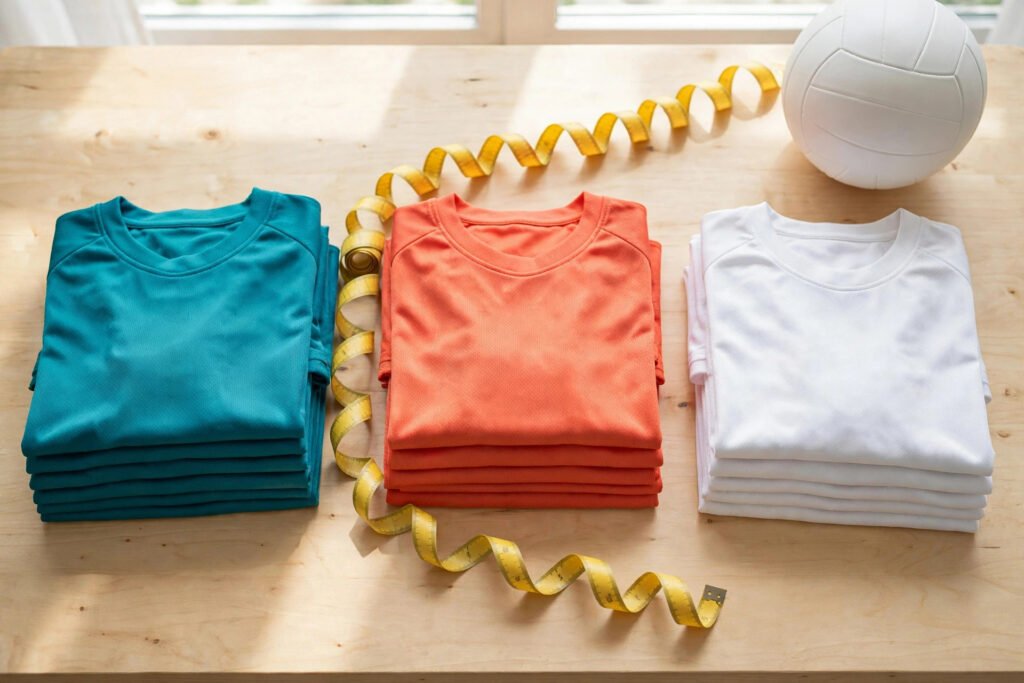
Ordering custom volleyball jerseys for your club looks simple from the outside: pick your colours, add names and numbers, place the order. But the choices you make before the first stitch goes in decide how the kits look, how they play, and whether they survive a full season of diving and washing. This guide walks through the decisions that matter, so your order comes out right the first time.
What Makes Volleyball Kits Different From Other Teamwear
Volleyball is a floor sport played at speed. Players dive, slide, and hit the ground dozens of times per match, which means jerseys take more contact abuse than most team kits. Fabric needs to be tough enough to handle that, and the cut needs to allow a full overhead swing for serving, spiking, and blocking.
Fit matters more than clubs usually expect. A jersey that rides up during a serve is a distraction, and tight sleeves around the shoulder restrict a hitter’s swing. If you run men’s, women’s, and junior squads, do not assume one cut works for everyone. Women’s cuts are shaped differently through the chest and waist, and juniors need their own size run rather than small adult sizes.
One more volleyball-specific detail: the libero must wear a colour that clearly contrasts with the rest of the team. That rule alone means most clubs order at least two colourways, so factor that into your quantities from the start. Our MOQ is 50 pieces, which comfortably covers a senior squad in home and away colours, with room for spares.
Fabrics That Hold Up on the Court
The workhorse fabric for modern volleyball jerseys is lightweight polyester interlock. It is durable against floor contact, wicks sweat away from the body, and keeps its shape wash after wash. For most club orders, a fabric in the 160 to 220 GSM range hits the sweet spot: light enough to play in, heavy enough to last.
Mesh panels are worth asking about. Small mesh inserts under the arms or along the sides add ventilation where players sweat most, without weakening the shirt. If your club plays in a hot hall or travels for summer tournaments, ventilation zones make a real difference in comfort.
Avoid cotton blends for match kits. They absorb sweat, get heavy during a long match, and lose shape faster than performance polyester. Cotton has its place in fan wear and warm-up hoodies, but match jerseys belong in technical fabric.
What to Specify When Ordering Custom Volleyball Jerseys
The printing method is your biggest decision. For most clubs, dye sublimation is the right answer. The design is dyed directly into the fabric, so it never peels, cracks, or fades, and full-colour graphics cost the same as a simple one-colour print. Names, numbers, sponsor logos, and all-over patterns all come in one clean process. Heat transfer works for very small orders, but on 50 pieces or more, sublimation wins on durability and value.
Get these details into your brief:
- Sleeve style: short sleeves are standard for indoor volleyball, with a tapered athletic cut that stays out of the way of the swing.
- Names and numbers: front numbers optional, back names and numbers standard. Confirm the size and position of each on the tech pack, because volleyball number placement follows convention.
- Libero colourway: a second design in a contrasting colour, built into the same order so the fabric and trim match.
- Neckline and trim: a simple crew or V neck with matching trim keeps the kit looking sharp without fuss.
- Sizing breakdown: a full size run per squad, with women’s and junior cuts specified separately.
Browse our sportswear range to see the kind of teamwear we build, including the custom teamwear catalog where volleyball styles sit alongside our other team kits.
Getting Sizes Right for Your Squad
Sizing mistakes are the most common and most avoidable ordering error. Never guess a size run from age or height alone. Measure each player once: chest, waist, and shoulder width are the three numbers that matter for a jersey, and they take about five minutes per player.
Build your breakdown with extras at the most-used sizes. Squads change during a season, players get injured, and a spare medium or large has saved more clubs than any amount of planning. If you order home and away colourways, size both the same way so a player can swap shirts between matches without thinking.
For junior teams, order junior-specific cuts. Adult XS on a 13-year-old looks wrong and plays wrong: the shoulders sit too wide and the body too long, which gets in the way of a young player’s technique.
How to Brief Your Manufacturer
A good brief saves weeks of back-and-forth. Send your design files in vector format where possible, list every size and quantity in a simple spreadsheet, and state your printing method and fabric preference outright. Reference photos of kits you like are genuinely useful, because they remove guesswork about fit and finish.
At Fabricory, we are a Sialkot-based maker of custom sportswear, working through vetted partner production units rather than a single in-house factory. What that means for you: one point of contact, consistent quality checks at every stage, and honest answers about what your design will look like in fabric before production starts. Always ask for a confirmed production schedule after your sample is approved, so your kits arrive in time for the season.
Ready to kit out your club? Send us your design and size breakdown, and start your custom order today. We will quote your exact specification and confirm everything before a single jersey is made.
Ready to start? Request a quote.